Exhibitions and more:
“Mobile Worlds” at Museum für Kunst und Gewerbe Hamburg.
On my way to Kassel, it happened that I stopped in Hamburg.
I visited some places, of course not everything that one as a tourist is supposed to visit.
Because of the time constraints, most of the places where I stopped were art venues.
So I visited some ongoing exhibitions.
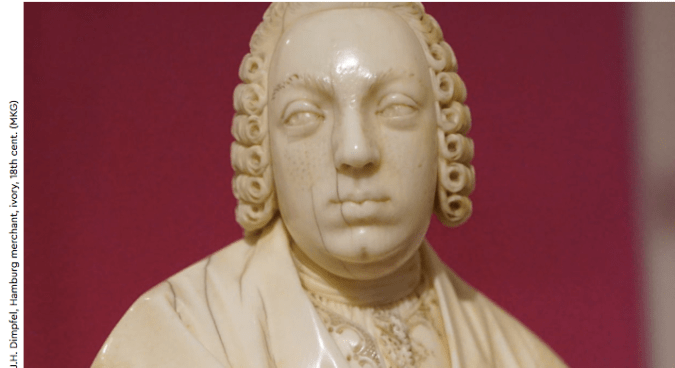
One of them was the “Mobile Worlds or the Museum of our transcultural present” that is on display in the Museum Fur Kunst und Gewerbe Hamburg. (MKG).
The Exhibition opened on 13 April and it will remain until 14 October 2018.
It was Saturday 6th October, when I visited it.
The room where there exhibition is displayed is located right in front of the entrance of the museum, that can be sign trough which I can think about its relevance and importance, compare to others actually on display at the MKG.
So, the exhibition is an important project for the museum and not only that! Indeed, after a visitor enters the space, he/she have a quick opportunity to think about some important questions such as:
A)How are the objects connected?
B)How do ideas circulate in the world and how this process can be translated though arts? And also, how did some artists who are located in Western countries incorporate ideas and practices which started in places different from those where they are located.
So, it can also be easily considered as an important exhibition, also, by most of its visitors.
To set up the exhibition, according to the exhibition statement, the museum invited the curator Roger M. Buergel to work with the art works present in its collection.
It is important to mention that Roger M. Buergel, is actually director of the Johann Jacobs Museum in Zurich and in 2007 he was the artistic director of the Documenta 12.
The central idea of the exhibition is to try to show though art objects that the world is connected actually from centuries ago.
And as I mentioned above, the conceptual idea and the display strategies adopted at the exhibition can work very well for most of the visitors.
But as in all exhibition projects, there are always some points missing or that had not been addressed which, in my opinion, could have enriched its narrative.
And here I would like to mostly talk about these issues or questions that were not addressed.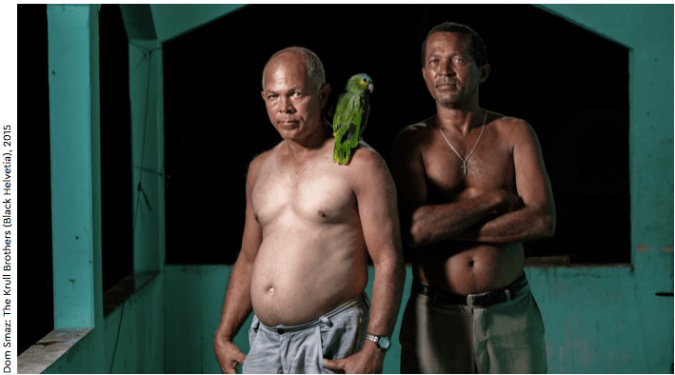
The first question that in my opinion was not addressed is related to the need to try to explain or at least clarify the power relations when that process of “mobile world” happened, at least the dynamics related to those objects that are now part of the collection of the museum, and especially those included in the exhibition.
In other words, was this process of taking artifacts or ideas characterized by pacific exchanges or by relation of exploitations and violence ?
So, the objects are there, but by seeing them one could not understand how the artifacts become part of the museum collection? Or is knowing this not important?
It was not enough to describe them the way it was done in the exhibition: “A variety of paintings, furniture, fashion, photography, graphic art, musical instruments, sculptures, objects, videos, sound installations and more, from different epochs and cultures, is on show.”
Again, it could be useful to remember that I like the idea of the exhibition because through it, it is possible to show that the world for such a long time has been connected and that things/people since ages have been moving from one place to other.
And the second crucial question is pinning down What and Who could have or can freely go around the world without any problem?
For sure, it is easy to exoticize commodities and artifacts, because they can be used in many ways in the process of affirmation and justification of the boundaries between Us and the Others. Indeed, foreign objects have been useful to consolidate the idea of national identities.
And, maybe it was to fulfill that need that most of the objects displayed in the exhibition had been taken away from the places where they had been created.
But the artifacts are now part of the collection of the museum and can used, from this starting point, in order to create whatever narratives it finds relevant for its own proposes.
But the questions to try to understand the makers or creators, or artists who made the objects, and generally people from the areas, or countries where they have been made: Did these people allow these objects to circulate ?
This question is relevant also because the exhibition organizers state that their work “reflects the social, cultural and political complexity of post-migrant society.”
But post-migration for whom?
For the recipient societies such as the city of Hamburg or for the people that come to the exhibition?
And what makes this migration perspective very relevant is the fact that the exhibition includes a section titled “African Terminal Transaction.”
The idea of the terminal is that the visitors of the exhibitions can donate objects that a group of African migrants that are part of the project will then sell in some African country. But again, how is that related to the fact that the world is connected? Or are they intentionally trying to repeat something that was practiced in the past: Bring less valuable objects from Europe to exchange them with valuable African raw materials?
I wish that the rules that govern world connectivity are diverse and are not the old ones.
And in addition to new rules, I hope that today new relations and connections among artworks from around the world can emerge.
Also because the mobile dimension of the world is an irreversible condition.
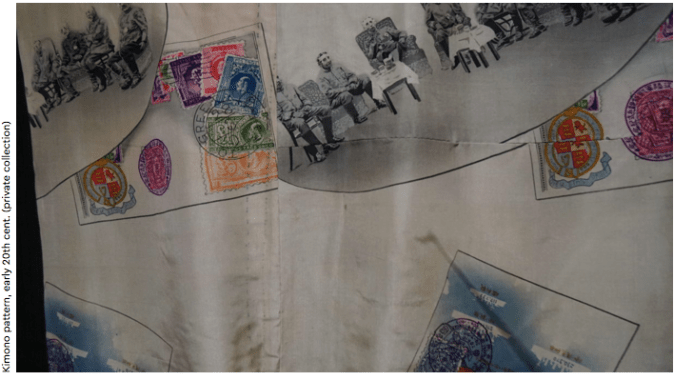
Mobile worlds or the museum of our transcultural present
13 April until 14 October 2018
The Museum für Kunst und Gewerbe Hamburg (MKG)
 Unexpected-Viewer